Zum Hauptinhalt springen
Y-DNA · Väterliche Linie

J

J (M304)

Y-DNA Haplogroup J

Ein Referenzprofil für einen Abstammungszweig. Gemeinsame Haplogruppen begründen weder eine familiäre Beziehung noch eine kulturelle Identität.

Referenzprofil

Hintergrund des Zweigs

Historischer Kontext für den Y-DNA-Abstammungszweig J

Origins and Evolution

Y-DNA haplogroup J is a major branch of the human Y-chromosome tree and is generally interpreted as having diversified in West Asia / the Near East during the late Upper Paleolithic to early Holocene. It is part of a lineage network that includes several major subclades with distinct geographic histories, especially J1 and J2, which together account for much of the haplogroup's modern distribution.

Population genetics studies suggest that haplogroup J expanded substantially during the Neolithic transition, when early farming and pastoralist communities spread across the Fertile Crescent, Anatolia, the Caucasus, and neighboring regions. Its deep internal diversity in the Near East indicates a long local history there, while later movements tied to trade, urbanization, and empire-building helped disperse it more widely.

Subclades

The most important major branches of haplogroup J are:

  • J1: Especially common in the Arabian Peninsula, Levant, and parts of the Caucasus and Horn of Africa. It is often associated with expansions in arid-zone pastoralist and historically Semitic-speaking populations.
  • J2: Strongly associated with the Fertile Crescent, Anatolia, the Caucasus, the Balkans, the Mediterranean, and parts of South Asia. It is frequently linked to early farming dispersals and later Bronze Age urban networks.

Additional downstream subclades of J reveal fine-scale regional histories and founder effects, but the broad distinction between J1 and J2 captures most of the major demographic pattern.

Geographical Distribution

Haplogroup J is most frequent in the Near East, Caucasus, Arabian Peninsula, and Mediterranean basin, with secondary presence across Europe, North Africa, the Horn of Africa, and South Asia. Its frequencies are typically highest in populations with historical ties to the Levant, Mesopotamia, Anatolia, and neighboring regions.

In Europe, J is more common in the southern and southeastern parts of the continent, reflecting ancient and historical gene flow from West Asia. In North Africa, it appears in varying frequencies due to multiple episodes of migration and contact across the Mediterranean and Red Sea.

Historical and Cultural Significance

Haplogroup J is one of the clearest paternal lineages associated with the spread of agriculture and subsequent complex societies in the Near East and Mediterranean world. J2, in particular, has often been discussed in relation to early Near Eastern farmers, while J1 has been linked in many studies to Arabian and Levantine demographic expansions.

Historically, this haplogroup is relevant to the population history of ancient Mesopotamia, the Levant, Anatolia, the Caucasus, Phoenician and Greek-era Mediterranean networks, and Islamic-era dispersals. Because of its broad regional spread and strong subclade structure, J is also important for genetic genealogy and ancient DNA research.

Conclusion

Y-DNA haplogroup J is a foundational West Eurasian paternal lineage with deep roots in the Near East and extensive downstream diversification. Its distribution reflects a combination of early Holocene demographic growth, Neolithic dispersals, Bronze Age connectivity, and later historical migrations, making it one of the most informative haplogroups for studying the peopling of West Asia and the Mediterranean.

Wichtige Punkte

  • Origins and Evolution
  • Subclades
  • Geographical Distribution
  • Historical and Cultural Significance
  • Conclusion
Referenzprofil

Baum und Verwandtschaft

Phylogenetischer Kontext und Subkladen

Entwicklungsweg

Folgen Sie den erfassten übergeordneten Zweigen bis J. Die Daten sind Schätzungen und können sich ändern, wenn Referenzdaten überarbeitet werden.

Schritte Haplogruppe Altersschätzung Archäologische Epoche Vergangene Zeit Unmittelbare Nachkommen Getestete moderne Nachkommen Antike Verknüpfungen
1 J Aktuell ~45,000 years ago Paleolithic 45,000 Jahre 3 1,968 16
Referenzprofil

Verbreitung weltweit

Geografische Verbreitung und moderne Präsenz

Erfasster Ursprung

Near East

Moderne Verbreitung

The populations where YDNA haplogroup J is found include:

  1. Levantine populations
  2. Arabian Peninsula populations
  3. Anatolian populations
  4. Caucasus populations
  5. Mesopotamian populations
  6. Greek and southern Italian populations
  7. Balkan populations
  8. North African populations
  9. Jewish populations
  10. Some South Asian populations

Regionale Präsenz

Near East High
Western Asia High
Southwest Asia High
Southeastern Europe Moderate
Southern Europe Moderate
North Africa Moderate
Eastern Africa Low
South Asia Low
Historischer Kontext

Ein Zweig durch die Zeit

Geschätzte Entstehung in einer breiten historischen Zeitleiste. Zeitmarken liefern Kontext und implizieren keine Verbindung zu bestimmten Kulturen.

  1. ~50k Jahre zurück

    Jungpaläolithikum

    Fortgeschrittene Werkzeuge, Kunst und kulturelle Vielfalt

  2. ~45k Jahre zurück

    Haplogruppe J

    Geschätzte Entstehung dieses Y-DNA-Zweigs; Daten und Orte sind Referenzschätzungen.

    Dieser Zweig
  3. ~20k Jahre zurück

    Letztes glaziales Maximum

    Höhepunkt der letzten Eiszeit, isolierte Bevölkerungen

  4. ~10k Jahre zurück

    Neolithische Revolution

    Beginn der Landwirtschaft und feste Siedlungen

  5. ~5k Jahre zurück

    Bronzezeit

    Metallverarbeitung, Schrift und frühe Zivilisationen

  6. ~3k Jahre zurück

    Eisenzeit

    Eisenwerkzeuge und ausgedehnte Handelsnetze

  7. ~2.5k Jahre zurück

    Klassische Antike

    Blüte griechischer und römischer Kulturen

  8. Gegenwart

    Gegenwart

    Moderne Zeit

Referenzprofil

Archäologischer Kontext

Erfasste archäologische Zuordnungen für den Y-DNA-Zweig J

Erfasste Zuordnungen

Diese Bezeichnungen beschreiben archäologische Kontexte erfasster Referenzproben mit Bezug zu J. Eine Zuordnung bedeutet nicht, dass alle Träger einer Kultur angehörten oder einer bestimmten Migrationsroute folgten.

Anatolian Neolithic Hajji Firuz Italian Neolithic Linear Pottery Culture Luristan Culture North-Central Italian Satsurblia Culture Turkey_Catalhoyuk_LN
Kulturzuordnungen basieren auf dem archäologischen Kontext antiker DNA-Proben und können regionale Verknüpfungen in bestimmten Zeiträumen widerspiegeln.
Referenzprofil

Probencatalog

10 direkte Träger und 6 Subkladen-Träger der Haplogruppe J

10 angezeigt · 16 passende Proben

Porträts sind KI-generierte Illustrationen. Probenbezeichnungen und Zugangs-IDs identifizieren die Referenzdatensätze.

Porträt Probe Land Epoche Datum Kultur Y-DNA Übereinstimmung
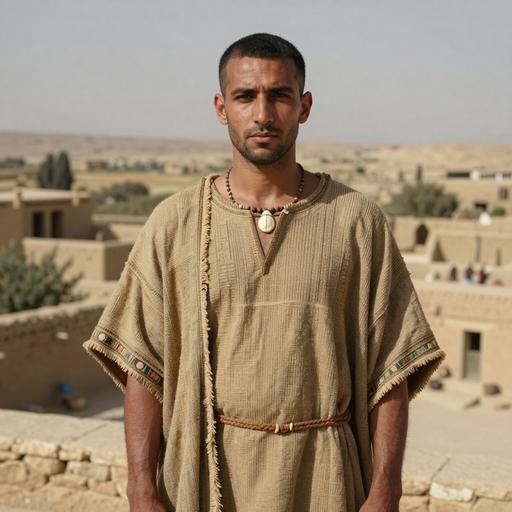
KI-generiertes illustratives Porträt von Umayyad individual, TellQarassa, Syria (666-768 CE)
Proben-ID: syr005
Syria The Umayyad Caliphate 666-768 calCE (1294±18cal BP, Wk-46474) Umayyad J Direkt
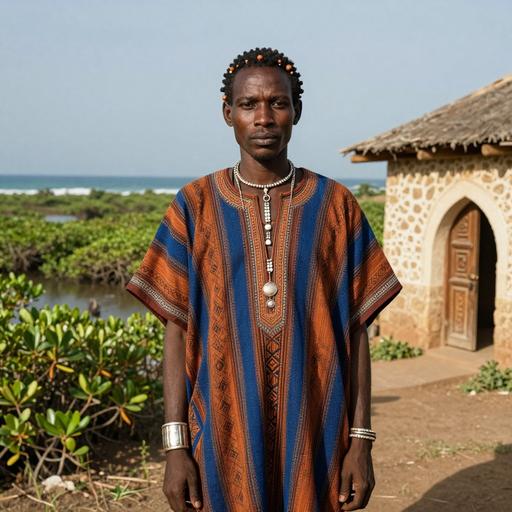
KI-generiertes illustratives Porträt von Medieval Swahili individual, Mtwapa (Kilifi), Kenya (1,250-1,650 CE)
Proben-ID: I23551
Kenya Swahili Culture of Mtwapa 1250-1650 CE Mtwapa J Direkt
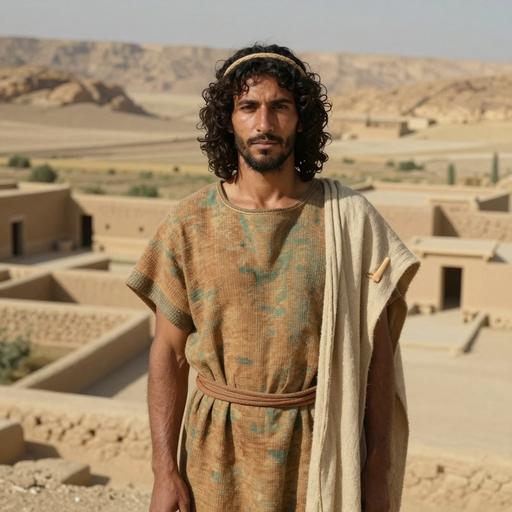
KI-generiertes illustratives Porträt von Canaanite/Phoenician individual, Ashkelon, Israel (1,376-1,127 BCE)
Proben-ID: ASH066
Israel Iron Age I Ashkelon, Israel 1376 BCE - 1127 BCE Philistine Ashkelon J Direkt
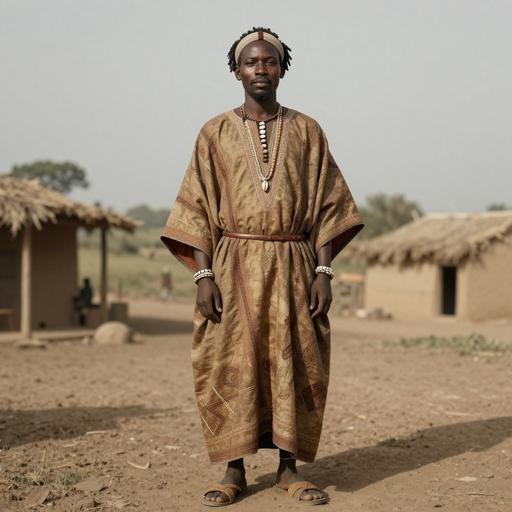
KI-generiertes illustratives Porträt von Medieval Swahili individual, Mtwapa (Kilifi), Kenya (1,435-1,469 CE)
Proben-ID: I23660
Kenya Swahili Culture of Mtwapa 1435-1469 calCE (435±15 BP, PSUAMS-12281) Mtwapa J Direkt
KI-generiertes illustratives Porträt von Krasnodar Krai LBA Dolmen individual, North Caucasus. Marchenkova Gora, Russia (1,450-1,200 BCE)
Proben-ID: I2051
Russia Late Bronze Age Dolmen Culture, Caucasus, Russia 1450-1200 BCE Dolmen J Direkt
KI-generiertes illustratives Porträt von Contemporary individual, Chinese. Sino-Tibetan. Henan. Y.haplogroup=J, China (c. 2,000 CE)
Proben-ID: Han1243
China Modern China 2000 CE Chinese J Direkt
KI-generiertes illustratives Porträt von Contemporary individual, Tibetic. Bodish. Sino-Tibetan. Chamdo. Tibet. Y.haplogroup=J, China (c. 2,000 CE)
Proben-ID: T363
China Modern China 2000 CE Chinese J Direkt
KI-generiertes illustratives Porträt von Contemporary individual, Mongolic. Linxia. Gansu. Y.haplogroup=J, China (c. 2,000 CE)
Proben-ID: DX1175
China Modern China 2000 CE Chinese J Direkt
KI-generiertes illustratives Porträt von Ancient Near Eastern Civilization individual, 'Ain Ghazal, Jordan (2,557-2,296 BCE)
Proben-ID: I1730
Jordan Jordan EBA 2557 BCE - 2296 BCE Jordanian Bronze J Direkt
KI-generiertes illustratives Porträt von Adygea Eneolithic individual, Unakozovskaya, Russia (4,676-4,458 BCE)
Proben-ID: I2055
Russia Eneolithic Caucasus, Russia 4676-4458 calBCE (5718±29 BP, OxA-43740) Caucasus Chalcolithic J Direkt
PATERNAL LINEAGE · ANCIENT DNA

Ancient lineage evidence map

Follow parent clades toward this branch and explore where ancient carriers were found.

Loading ancient observations…

Markers are archaeological find locations. A dashed connector is an uncertain, proposed geographic transition between consecutive branches supported by multiple dated observations; it is not an exact travel route, birthplace or proof of direct descent. Parent-clade samples may belong to other descendant branches. Gaps remain where evidence is insufficient. Sample dates differ from haplogroup formation dates.

Referenzprofil

Trägerverteilungskarte

Geografische Verteilung von 16 antiken DNA-Proben (direkte und Subkladen-Träger von J)

Direkter Träger Subkladen-Träger
Zeitraumfilter
Alle Zeiträume
Alle Proben werden angezeigt
Referenzprofil

Zeitliche Verteilung

Verteilung der Träger über archäologische Epochen

Referenzprofil

Geografische Verteilung

Anzahlen nach erfasstem Probenland. Sie spiegeln die verfügbare Referenzauswahl wider, nicht Bevölkerungshäufigkeiten.

Referenzprofil

Verteilung Land × Epoche

Vergleichen Sie erfasste Probenanzahlen nach Ländern und archäologischen Epochen. Wählen Sie eine belegte Zelle, um eine Probe anzusehen.

Daten

Daten und Herkunft

Quellenangaben und Datenqualität

Zuletzt aktualisiert 2026-06-17

Datenquelle

Klassifikation, geschätzte Daten und geografischer Kontext spiegeln die erfassten Referenzdaten wider und können sich bei überarbeiteten Belegen ändern. Die Probenabdeckung ist ungleichmäßig; erfasste Orte und archäologische Zuordnungen begründen weder persönliche Herkunft noch kulturelle Identität.